
Table of contents
Picture a pregnant woman who needs to visit a different healthcare professional due to an urgent health concern. All records of her previous antenatal visits were maintained in a physical file, making it very difficult to connect the dots.
So instead of treating the patient, the professional needs to first decode the entire pregnancy, which obviously takes time.
In such situations, digital antenatal care records can become a life-saving solution. They can help capture every single detail in an organized and secure manner, without worrying about data loss or violation.
According to the WHO, electronic antenatal records support continuity of pregnancy care by linking every standalone visit, providing a clear view.
Let’s look out what contribution does digital pregnancy records can make to streamline antenatal care.
What Are Digital Antenatal Records?
Digital antenatal records are centralized data related to maternal and fetal health stored electronically for the purpose of organizing and coordinating the entire antenatal care cycle.
These are often maintained through antenatal care software, which helps experts in ANC record management.
They basically include information such as:
- Maternal demographics
- Pregnancy details
- Medical history
- Lab tests and pregnancy scans
- Antenatal visit notes
- Maternal health measurements
- Fetal health records
- Appointments and follow-ups
- Prescriptions and home care instructions
How Digital Antenatal Records Improve Pregnancy Monitoring
Every pregnancy visit generates lots of data related to maternal and fetal health. But how does electronic data help experts utilize these details effectively? Let’s explore.
Track Maternal and Fetal Health Over Time
Maternal healthcare technology encourages the use of digital antenatal care records for capturing, organizing, and comparing multiple healthcare data throughout the maternity cycle.
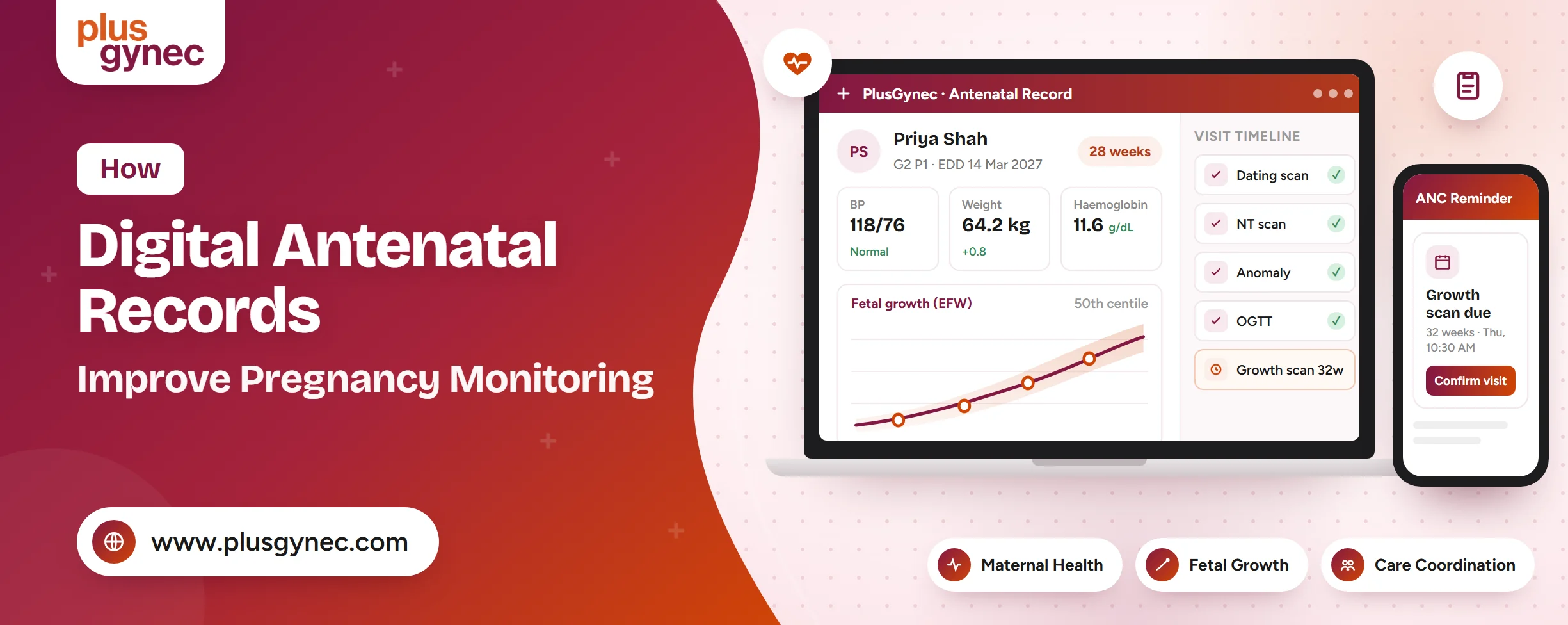
At each visit, new information such as the mother's blood pressure, weight, test results, and the baby's growth measurements can be added to the digital record.
Instead of viewing each appointment as an isolated event, healthcare professionals can review how these measurements have changed over time.
Read more: 8 Essential Medical Practice Management Software Features in 2025
Provide a Complete View of Pregnancy History
A pregnancy involves multiple check-ups, tests, scans, and health assessments over several months. Digital antenatal records bring this information together in one organized place, giving healthcare professionals a more complete view of the pregnancy journey.
Electronic pregnancy records create a continuous and organized history of pregnancy care, helping healthcare professionals see the bigger picture and make more informed decisions throughout the pregnancy journey.
Support Early Identification of Potential Risks
Digital antenatal records help healthcare professionals monitor pregnancy-related information over time, making it easier to identify changes or patterns that may require further attention.
By reviewing information collected across multiple visits, healthcare professionals may be able to spot unusual changes or trends and take appropriate next steps.
Digital records can also make important information such as previous pregnancy complications, existing health conditions, and test results easier to access. This gives healthcare professionals more context when assessing potential risks.
Improve Access to Important Health Information
During pregnancy, important health information can be collected across multiple antenatal visits, tests, and scans. Digital antenatal records keep this information organized in one accessible system, making it easier for authorized healthcare professionals to find the details they need.
Instead of searching through paper files or contacting different facilities for information, healthcare professionals can review relevant records such as medical history, previous visit notes, test results, ultrasound reports, and care plans from the digital system.
Reduce Missing or Duplicate Information
When the information is managed through paper files or separate systems, important details can be misplaced, overlooked, or recorded more than once.
Digital antenatal records help keep pregnancy-related information organized in a central location. This makes it easier to maintain a more complete and consistent record.
Digital systems can also use standardized fields and documentation formats, helping healthcare professionals record important information consistently and making missing details easier to identify.
Read more: Top Medical Practice Management Software of 2025
Improve Communication and Care Coordination
Pregnancy care may involve multiple healthcare professionals, including obstetricians, nurses, sonographers, laboratory specialists, and other experts. When each professional has access to different pieces of information, maintaining clear communication and coordinated care can become challenging.
Digital antenatal records bring relevant pregnancy information together in one organized system. Authorized healthcare professionals can review previous visit notes, test results, scan reports, and care plans, helping them understand the care already provided.
Challenges to Consider When Implementing Digital Antenatal Records
Going digital sounds simple, but implementing antenatal records comes with a few challenges. Let’s explore them.
Data Privacy and Security
Healthcare organizations need appropriate measures to protect sensitive information from unauthorized access, loss, or breaches.
Integration with Existing Healthcare Systems
Poor integration can create disconnected records and require healthcare professionals to enter the same information into multiple systems.
Data Accuracy and Completeness
Healthcare professionals need to maintain accurate and up-to-date records to support effective pregnancy monitoring.
Staff Training and Adoption
If the system is difficult to use or does not fit existing workflows, adoption can become challenging.
Access to Technology and Infrastructure
Reliable internet connectivity, appropriate devices, and technical support may be necessary, particularly when records need to be accessed across different locations.
Cost and Implementation Resources
Introducing a digital record system may involve costs related to software, infrastructure, training, maintenance, and ongoing technical support.
Building a More Connected Approach to Prenatal Care
Pregnancy care involves a continuous flow of information—from routine check-ups and health measurements to test results, scans, and care plans. Digital antenatal records help bring these individual pieces together, creating a more connected view of the pregnancy journey.
By keeping maternal and fetal health information organized and accessible, digital records can help healthcare professionals track changes over time, review pregnancy history, and coordinate care across different providers or facilities.
Rather than treating each antenatal visit as an isolated event, they help connect information across the pregnancy journey—supporting a clearer and more informed approach to prenatal care.
Read more: How to Increase Revenue in Healthcare: 6 Problems Holding You Back
FAQs
How do digital antenatal records help monitor pregnancy?
Digital antenatal records help healthcare professionals monitor pregnancy by keeping important maternal and fetal health information in one organized system. Information from antenatal visits, including health measurements, test results, ultrasound reports, and clinical notes, can be recorded and reviewed over time.
How do digital antenatal records improve continuity of care?
They keep relevant pregnancy information organized and accessible to authorized healthcare professionals, making it easier to understand the care already provided when an expectant mother visits a new provider or facility.
Can digital records help identify pregnancy risks early?
By organizing health information from multiple visits, digital records can help healthcare professionals review trends and changes that may require further assessment or closer monitoring.
Are digital antenatal health records secure?
Digital antenatal records can be protected through measures such as access controls, authentication, encryption, and audit trails. The level of security depends on how the healthcare organization designs, manages, and maintains its digital systems.